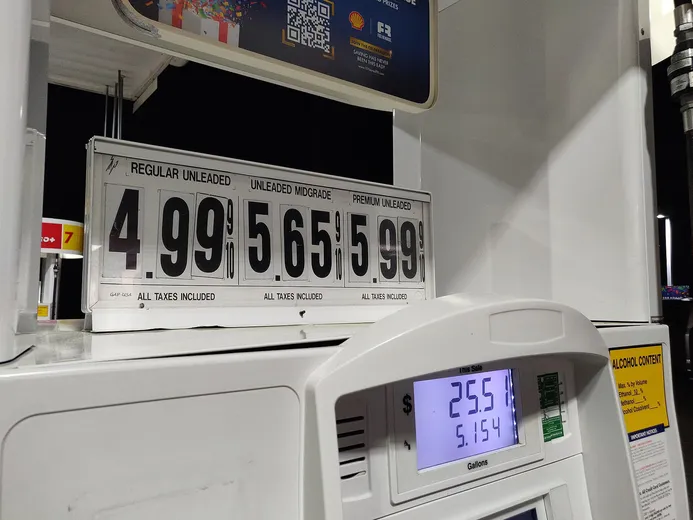
A price rise can land differently on a household whose income arrives in a set amount than on one whose pay may change with hours or wages. The difference is partly about purchasing power, but also about timing: a grocery bill or fuel cost can change before income does, while rent, insurance and other commitments leave little room to adjust. Inflation measures describe broad price movements, not any one household’s budget. Understanding the squeeze means looking at which costs move, when money arrives and what can be postponed.
An average basket is not a personal budget
The September 2026 Consumer Price Index rose 0.6% in the month and 3.7% over the year. Those figures summarize price change across a weighted basket of consumer goods and services; they do not say that every household’s expenses rose by that amount. In that month, gasoline rose sharply, shelter increased, and food overall was unchanged. A household that drives often may feel the fuel change more than one that relies on public transportation, while someone with high housing costs may be more affected by shelter changes. Bureau of Labor Statistics
That variation matters for fixed incomes because there may be less room to absorb a cost increase by shifting work hours or negotiating a raise. The Federal Reserve’s 2025 household survey found that prices remained the most common financial concern, and 58% of adults said price changes compared with the prior year had made their financial situation worse. That is evidence of reported concern, not proof that inflation affected every person in the same way. Federal Reserve
Timing can turn a small rise into a hard month
Household bills do not all reset together. A grocery or fuel expense can respond quickly to prices, while a lease, insurance premium, or service contract may change on a different schedule. Income may also arrive on a set calendar. The result is a cash-flow problem: a household can face a higher bill now even if a regular income adjustment, if any, comes later. This is a practical distinction between the average change in prices and the date a specific household must pay.
A useful way to see the timing is to separate recurring commitments from costs that can be adjusted week to week. Rent, utilities and debt payments are often difficult to change immediately. Some shopping choices, travel or discretionary purchases may be more flexible, though not equally so for every person. Cutting an optional expense can help with a temporary gap, but it cannot always offset increases in necessities or make an income schedule more responsive.
The room to adjust is uneven
Flexibility depends on more than income timing. A household with savings can draw on them to smooth a short-term jump; a household already using its full monthly income may have to delay another payment or reduce spending at once. In the Fed survey, 63% of adults said they could cover a hypothetical $400 emergency expense with cash or its equivalent, and 16% did not pay all bills in the prior month. These measures show variation in financial cushions and hardship; they do not identify the cause of an individual household’s experience. Federal Reserve
A fixed income can also mean predictable income, which helps with planning. The challenge arises when the spending side changes faster than the income side or when essential costs take up a large share of available money. Two households with the same income can face different pressure because their housing, transportation, health and food costs are different. A national inflation rate cannot reveal that mix on its own.
Read the index, then read the household ledger
For a clearer picture, compare actual household expenses across time: what changed, when the change took effect, and whether it is recurring. A monthly budget can distinguish an ongoing increase from a one-time bill and show where payment dates cluster. The CPI is useful context for broader price movements, but its population-wide basket is not a replacement for a household’s own records. BLS describes CPI as a measure of changes in prices consumers pay, with weights based on spending patterns across defined population groups. Bureau of Labor Statistics
The practical point is not that every fixed-income household is equally exposed. It is that limited ability to change income quickly makes timing and spending mix especially consequential. A household may experience a squeeze even when some prices are flat, because the items it buys most have risen; another may be less affected by the same headline rate. Looking at both the calendar and the basket explains why a common inflation figure can coexist with very different everyday pressures.
Sources & further reading
- September 2026 Consumer Price Index ↗Bureau of Labor Statistics
- Economic well-being of U.S. households in 2025 ↗Federal Reserve