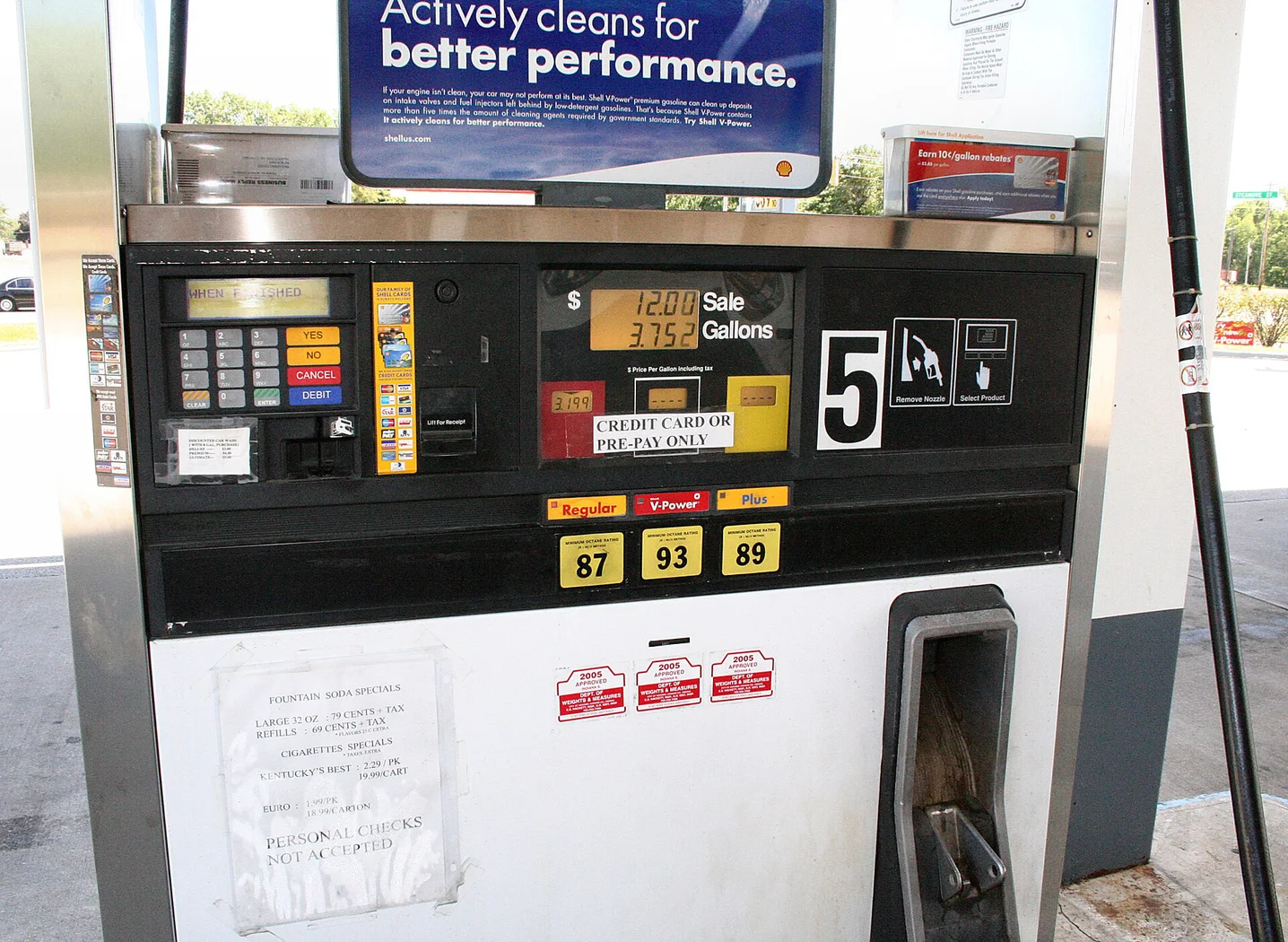
Two drivers can buy the same grade of gasoline on the same day and still pay noticeably different prices. The gap is not simply a matter of one station charging more for the same barrel of oil. Retail prices combine the cost of crude, taxes, refining, distribution and marketing, with each component shaped by regional and local conditions. A national average summarizes a broad market; it cannot tell a motorist exactly what a particular station will charge.
The pump price has several layers
Crude oil is usually the largest component of a gallon’s retail price, but it is only one part of the total. The Energy Information Administration breaks the retail price into crude oil, taxes, refining costs and profits, and distribution and marketing U.S. Energy Information Administration. A change in crude prices can affect many markets, yet the final price also depends on what happens after oil reaches a refinery.
Taxes create a geographic difference drivers can see directly. The federal motor-gasoline tax is 18.40 cents per gallon, while state taxes and fees averaged 33.55 cents per gallon as of January 2026; sales, local and municipal taxes may add more in some places U.S. Energy Information Administration. These are separate from the wholesale cost of fuel. A higher tax can therefore contribute to a higher posted price even if two stations buy fuel under similar market conditions.
Refineries make fuel for particular markets
Gasoline is not always an interchangeable product from one region to another. Different areas can require different formulations to reduce air pollution, and the refining process and available crude affect production costs. Fuel ingredients such as ethanol also have costs that feed into the finished product U.S. Energy Information Administration. If a market’s required blend is more costly to produce, that can show up at the pump independently of the crude-oil price.
Refining costs and profits vary by season and region. Gasoline demand usually rises in summer, which generally puts upward pressure on prices U.S. Energy Information Administration. The chain connecting a refinery to a driver matters too: most gasoline moves by pipeline to terminals near consuming areas, may be blended there to meet local specifications, and is then trucked to stations. Transport links and the availability of supply can make two regions respond differently to the same broad oil-market movement.
Local stations face different costs
The last part of the journey is retail, where location and competition matter. A station’s costs can include wages, equipment, rent, insurance, overhead and state or local fees; these can vary even between nearby outlets. Traffic patterns, the station’s supply arrangements and the number and locations of competitors also influence pricing decisions U.S. Energy Information Administration. One operator may price to attract passing customers, while another may face higher rent or have fewer nearby rivals.
A practical comparison should hold the product and purchase conditions steady. Two drivers looking at regular gasoline on the same day can still encounter different local taxes, fuel supply costs, station expenses and competitive pressures. If they compare different grades instead, they introduce another factor: higher-octane gasoline costs more to produce, and in 2025 the national annual average premium price was about 93 cents per gallon above regular U.S. Energy Information Administration.
Averages describe change, not every checkout
A national price average can be useful for tracking broad movement, but it is not a promise about any one neighborhood. The Consumer Price Index illustrates another kind of summary: the U.S. gasoline index rose 9.1 percent in September 2026 and 34.2 percent over the 12 months ending that month Bureau of Labor Statistics. Those figures describe price change in the index, not the exact amount paid by a specific driver or the price gap between two stations.
That distinction matters when a household tries to interpret a sudden jump. A national increase may coincide with a local tax difference, a region-specific refining constraint, or a station’s own operating costs. The index records a broad pattern; it does not prove which factor caused one person’s bill to rise. A useful explanation starts with the full chain—from crude oil to refinery to terminal to station—and then asks which parts differ in the places being compared.
Sources & further reading
- Gasoline explained: factors affecting prices ↗U.S. Energy Information Administration
- September 2026 Consumer Price Index ↗Bureau of Labor Statistics