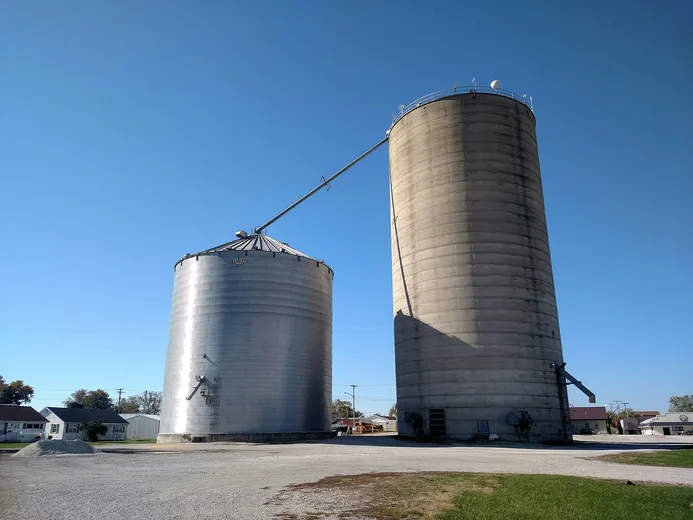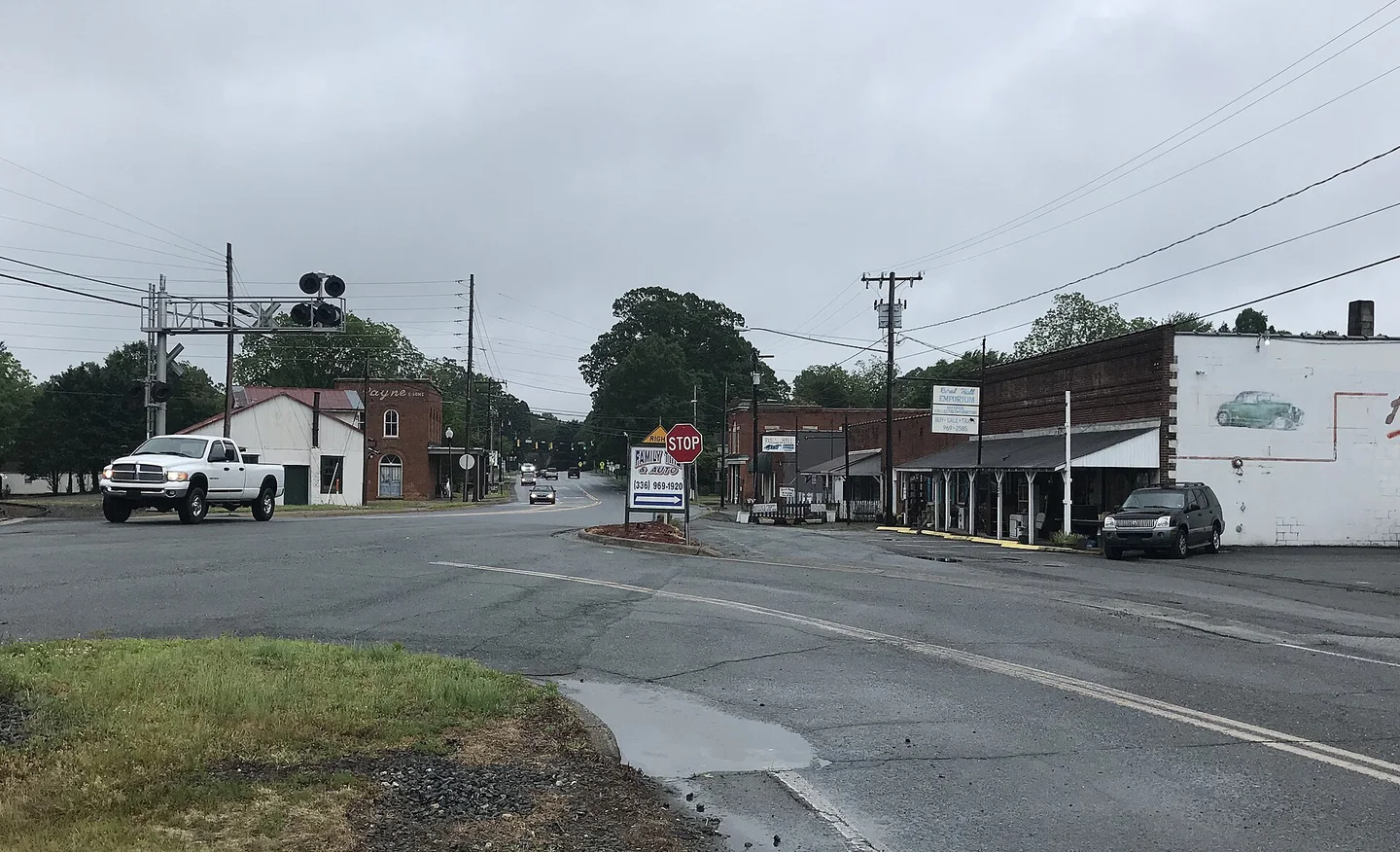
A farm may define how outsiders picture a rural county, but the local workforce can include far more than agricultural jobs. A clinic, school, retailer, and farm can all contribute to work in the same fictional county, with each serving different needs and relying on different sources of demand. That is why rural employment data include services and retail: the industries people associate most strongly with a place are not necessarily the ones accounting for most job growth over time. The distinction matters when readers interpret local labor markets.
The familiar industry is not the whole labor market
Agriculture, forestry, and mining remain important sectors in some rural areas. But the USDA Economic Research Service says service and retail industries accounted for most job growth in rural America over the past few decades USDA Economic Research Service. The finding concerns a long period and broad rural patterns; it is not a fresh ranking of industries in every county or a claim that those sectors have the same role everywhere.
An industry’s visibility can differ from its employment contribution. A farm may occupy a large area and anchor a community’s identity, while schools, health care, shops, and other services employ people whose work is less conspicuous from the highway. Reading employment by industry helps separate cultural association from measured job trends. The data do not make agriculture unimportant; they show why a rural employment picture needs more than one sector.
A fictional county shows the range
Imagine a fictional county with a farm, a clinic, a public school, and a retailer. The farm’s work is directly tied to agricultural production. The clinic provides health services, the school provides education, and the retailer sells goods to residents. Each belongs to a different kind of economic activity, so counting only farm employment would leave out workers whose jobs also support daily life and the county’s economy.
This is an illustrative example, not a report about an actual county or a claim about how many people each institution employs. Nor does it establish that services or retail are growing in this imagined place. It simply makes the classification point visible: rural employment spans industries, and the mix can vary from one community to another. USDA describes rural labor-market research as covering employment, unemployment, labor-force participation, and educational attainment, among other conditions USDA Economic Research Service.
Job growth and job levels answer different questions
A sector’s contribution to job growth over several decades is not the same as its share of all jobs today. A sector can employ many people without accounting for most of the increase over a particular period. Conversely, a growth contribution does not mean that the industry is the largest employer in each county. The USDA’s statement about services and retail is explicitly about job growth over the past few decades, while its description also notes that agriculture, forestry, and mining remain important in some rural areas USDA Economic Research Service.
That time framing matters because a trend summary should not be read as a current local tally. A county-level question requires evidence at the county level and for the relevant time period. A national or broad rural pattern can guide questions to ask, but it cannot substitute for local data. Readers should also distinguish employment counts from measures such as unemployment or labor-force participation, which describe different parts of a labor market USDA Economic Research Service.
Rural communities differ, so context matters
The USDA notes that rural areas differ widely in population patterns and economic expansion, and that researchers often use nonmetropolitan counties when studying rural conditions. It also describes more detailed classifications because a simple rural-urban division can conceal settlement differences within counties USDA Economic Research Service. Those details caution against treating rural America as one uniform labor market.
Income data require similar care. The Census Bureau reports income through several surveys and programs that differ in questionnaire detail, sample size, and methodology U.S. Census Bureau. That page is not a breakdown of rural industry employment, but it reinforces a practical point: figures answer questions according to how they were collected and defined. To understand rural work, readers should ask what geography, time period, and labor-market measure a number covers. A familiar farm image may explain part of a place; the full employment picture also includes the businesses and services residents use every day.
Sources & further reading
- Rural economy and population ↗USDA Economic Research Service
- Income in the United States ↗U.S. Census Bureau