Economic growth matters because rising production can change the choices facing employers, workers and governments. If a factory makes more goods, it may need additional shifts, materials and transport; suppliers may receive more orders. That possibility helps explain why policymakers and businesses watch output. But growth is a measure of economic activity, not a report card for every household. It cannot by itself show who gained, whether jobs improved, or whether a particular town’s residents feel better off.Bureau of Economic AnalysisBureau of Labor Statistics
Output gives planners a common measure
Gross domestic product measures the value of final goods and services produced in the United States. The percentage change in GDP from one period to another is a widely used gauge of whether the economy is growing or shrinking. Real GDP adjusts for inflation, allowing comparisons across periods with different price levels; current-dollar GDP instead reflects market prices during the period.Bureau of Economic Analysis
That common measure helps institutions make plans. BEA says the White House and Congress use GDP data when planning spending and tax policy, the Federal Reserve uses them in monetary policy, and state and local governments and businesses also rely on them. Businesses can consider output trends when weighing jobs, expansion or investment, while governments can use them as one input to broader decisions.Bureau of Economic Analysis
A hypothetical factory’s orders ripple outward
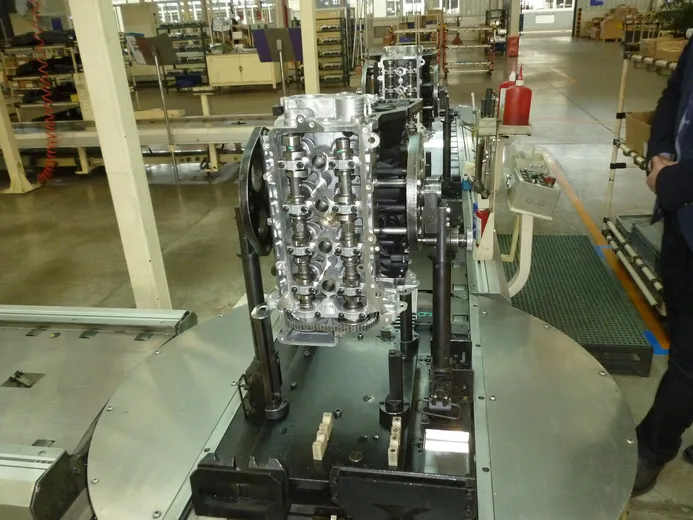
Imagine, hypothetically, a town factory increasing production of a finished product. It may order more parts, packaging or repair services, and suppliers may then consider whether they can meet the added demand. A local freight business might also see more requests to move goods. These are plausible channels through which production can affect other businesses; this invented example does not establish that any real town or worker experienced such changes.
A local employer might use rising orders to plan staffing or equipment, but an increase in production does not guarantee that it will hire. It could meet demand by using existing capacity, changing hours or improving how much each worker produces. BLS measures labor productivity by comparing output growth with hours worked, illustrating why output can rise without a matching increase in hours.Bureau of Labor Statistics
Growth is not a distribution measure
GDP totals production; it does not say how the resulting income is divided among workers, businesses or owners of capital. Nor does a national total tell whether gains are concentrated in particular industries or regions. A growing economy can coexist with households facing different wage changes, job prospects or costs. Those outcomes require other information alongside GDP, rather than a conclusion drawn from the growth rate alone.
Regional GDP can help narrow the geographic view. BEA describes state GDP as a measure of the value of goods and services produced in each state, with industry contributions included. Its second-quarter 2026 release showed real GDP increasing in 44 states and the District of Columbia, while state changes ranged from a 4.0 percent increase in New York to a 2.3 percent decrease in West Virginia.Bureau of Economic Analysis Even that broader local lens measures production, not each resident’s income or quality of life.
Read the rate with its limits in view
GDP estimates are revised as additional information becomes available. BEA produces advance, second and third estimates for each quarter, incorporating more source data over time. Quarterly GDP growth is generally reported at an annual rate for easier comparison, so readers should not mistake an annualized rate for the percentage change that occurred within the quarter itself.Bureau of Economic Analysis
The useful question is therefore not whether growth alone proves that conditions improved, but what it helps explain and what other measures are needed. Output can inform decisions about capacity, hiring, budgets and monetary policy. To understand workers’ experience, readers also need evidence about employment, pay, hours and distribution. Growth is an important measure of the economy’s production; it is not a substitute for those more specific measures or a guarantee that gains will reach every community.
Sources & further reading
- Gross domestic product explained ↗Bureau of Economic Analysis
- GDP by state ↗Bureau of Economic Analysis
- Labor productivity and costs ↗Bureau of Labor Statistics