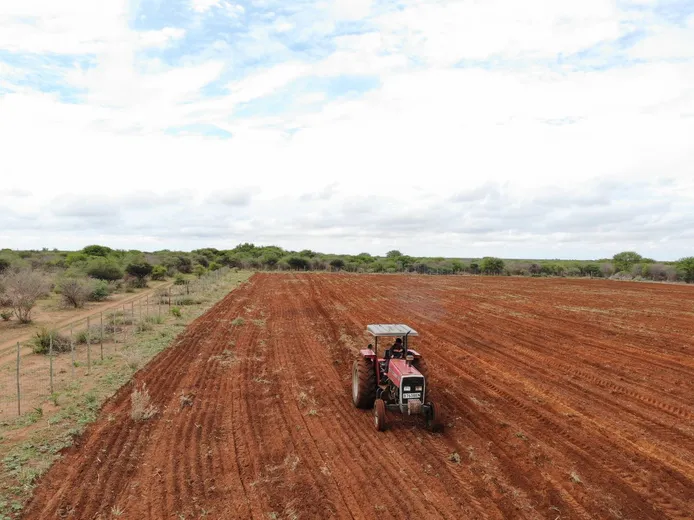
A county map can make “rural” look like a simple label: one shaded area, one category, one number. Yet a county may contain a compact town, farms and wide stretches of sparsely settled land. Researchers and programs may need different definitions to study that mix or decide where a rule applies. The U.S. Department of Agriculture’s Economic Research Service says nonmetropolitan counties are the most common basis for rural analysis, but it also uses more detailed county and sub-county classifications. The label depends on the question being asked.
The county line is a useful start
Many analysts study rural America using nonmetropolitan, or nonmetro, areas defined at the county level. That approach gives researchers a consistent geographic unit for comparing labor markets, population change and other conditions. ERS research pages describe rural employment and education through measures such as employment, unemployment and labor-force participation, while noting that rural conditions vary among places. A county-based category is therefore a practical framework, not a claim that every resident within its boundary lives in the same kind of settlement. USDA Economic Research Service
Consider a fictional county with a small town at its center and dispersed homes and businesses beyond it. If a study classifies the whole county as nonmetro, the town and outlying areas share the same broad label in that analysis. The classification can help compare counties, but it may conceal local differences in access, density or economic activity. That is a limitation of geographic scale, not proof that the underlying analysis is useless.
More than one rural scale exists
ERS says it has developed multi-level county classifications to measure rurality in greater detail and assess the economic and social diversity of nonmetro America. It has also developed sub-county classifications because counties can be too large to distinguish rural and urban settlement patterns accurately. Different scales answer different questions: a county measure supports broad comparison, while a finer unit can better reflect the geography within a county. USDA Economic Research Service
For the fictional county, a sub-county classification could distinguish the compact town from remote areas more clearly than a single county label. But greater detail is not automatically better for every purpose. A national comparison may need a stable, comparable county unit; a local program may need to identify a smaller area. Readers should check whether a claim concerns counties, smaller places or some other unit before applying it to a particular community.
Program definitions have a different job
Research classifications describe places for analysis; program rules can use geography to define where assistance may be available. ERS explicitly notes that its sub-county classifications can address program eligibility concerns. That does not mean every federal program uses the same “rural” definition, or that an area labeled rural in a research table automatically qualifies for a particular benefit. The program’s own description and rules determine the relevant geographic test. USDA Economic Research Service
The General Services Administration’s Assistance Listings provide public descriptions of federal programs offering grants, loans, scholarships, insurance and other assistance. The listings are a place to examine potential funding sources, but the existence of a listing does not establish that a particular applicant, town or county meets its requirements. Readers should look at each program’s terms and geography rather than carry a rural label from one dataset into a separate decision. U.S. General Services Administration
Read the definition before the number
When a report says a rural area gained or lost population, check the classification and time period that produced the result. ERS notes that nonmetro population has increased each year since 2020 because of migration, while some areas continue to lose population; opportunities differ widely from county to county. Those statements describe broad patterns and variation, not the experience of every county or neighborhood. A headline using “rural” without the geographic definition may flatten that variation. USDA Economic Research Service
A useful reading habit is to ask three things: what unit is classified, which definition is being used, and what decision or comparison the measure is meant to support. Then keep that label attached to the claim. “Nonmetro county” and “rural settlement within a county” can describe different slices of the same map. That precision helps readers interpret economic data without assuming that one classification settles research questions, local conditions and program eligibility all at once.
Sources & further reading
- Rural economy and population ↗USDA Economic Research Service
- Assistance listings ↗U.S. General Services Administration